Fake job offer checker
Paste a job message, email or offer letter, or add a screenshot. See the warning signs found in fake jobs before you reply, pay or share anything.
The short answer
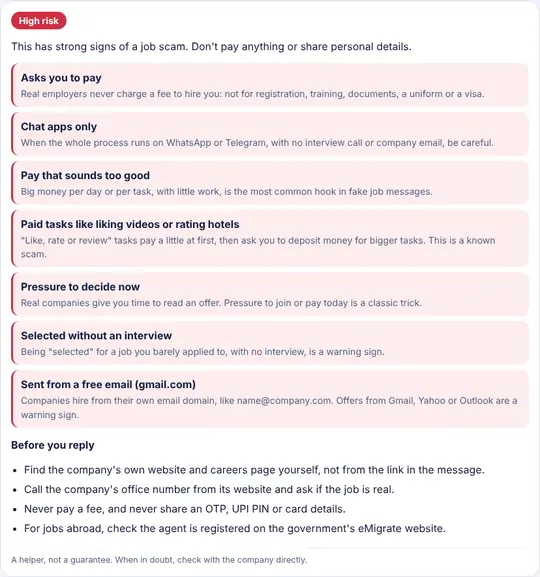
A real employer never charges you to get a job: not for registration, training, documents, a uniform or a visa. Other strong signs of a fake offer: an email from Gmail or Yahoo instead of the company's own domain, hiring only on WhatsApp or Telegram, being "selected" without an interview, big money for simple tasks like liking videos, and pressure to decide today.
An example
"Congratulations! You are selected for Work From Home Data Entry job without interview. Earn Rs 3,500 per day. Pay a refundable registration fee of Rs 1,499. Contact HR on WhatsApp only. Limited seats, join today!" The checker marks it High risk: it asks you to pay, it's WhatsApp only, the pay is too good, you were selected without an interview, and it pushes you to decide now.
How it works
- Paste the message, or add a screenshot. Screenshots are read on your own phone, never uploaded.
- Add the sender's email address if it came by email. The checker spots free email, look-alike company names and odd domain endings.
- See each warning sign with a plain explanation, and what to do before you reply.
Before you reply to any job offer
- Find the company's website and careers page yourself, not from the link in the message.
- Call the company's office number from its website and ask if the job is real.
- Never share an OTP, UPI PIN or card details, and never pay a fee.
- For jobs abroad, check the agent is registered on the government's eMigrate website.
Questions people ask
Is the message saved anywhere?
No. The message, email and screenshot are checked on your device and never sent or saved.
No warning signs found. Is the job safe?
It's a good start, but scams change. Still check the company yourself before you resign or share documents.
What if I already paid?
Stop all contact, keep the screenshots and payment details, tell your bank at once, and report it at the national cyber crime portal or helpline 1930.